
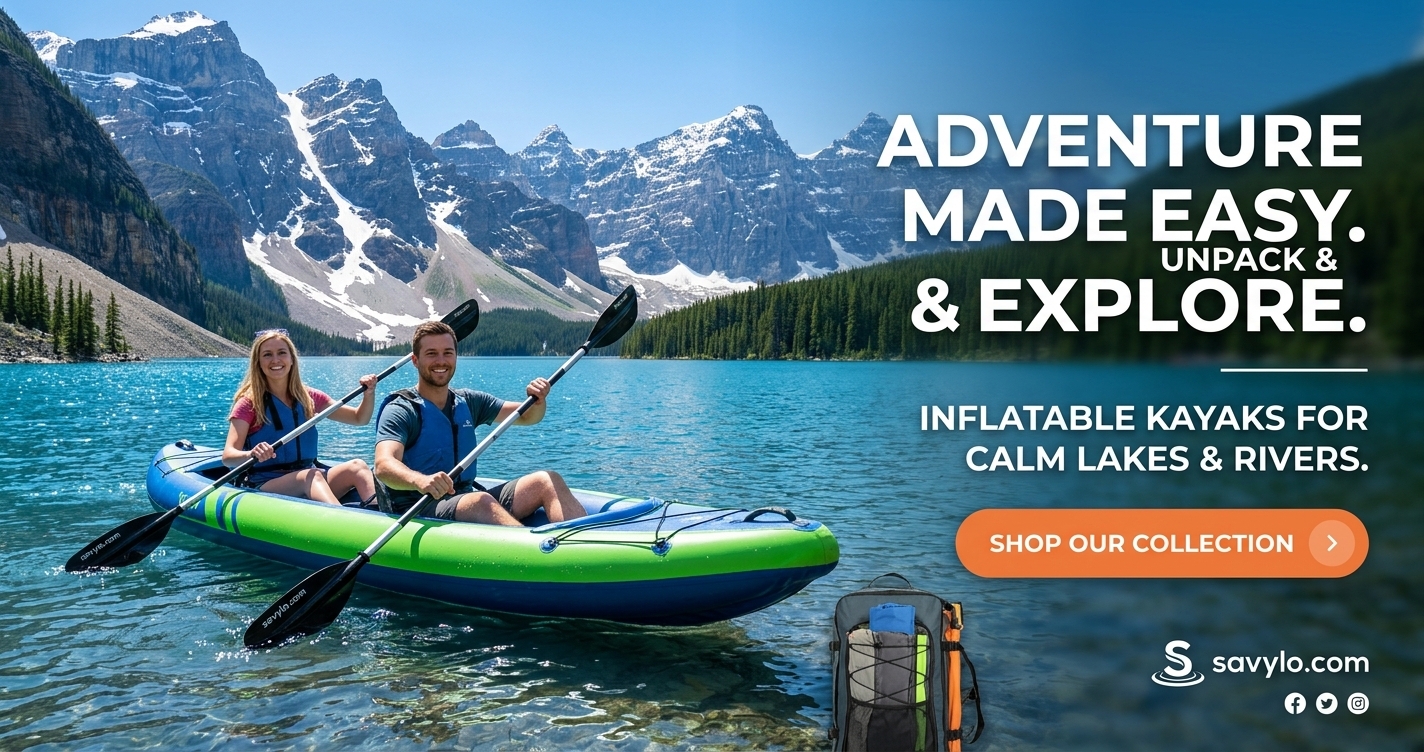
For decades, the idea of getting out on the water meant navigating a series of logistical headaches: mounting heavy 12-foot plastic hulls onto roof racks, storing massive hard-shell kayaks in already cramped garages, or paying steep rental fees at crowded beaches.
Today, modern inflatable watercraft—pioneered by legendary outdoor brands like Sevylor—have completely rewritten that story. Whether you are a weekend recreational paddler, an avid angler, or a family looking for a convenient way to explore calm lakes and rivers, inflatable kayaks offer a mix of portability, stability, and durability that traditional rigid boats simply cannot match.
1. Ultimate Portability: Freedom in a Backpack
The single biggest barrier to entry for prospective paddlers is transport and storage. Traditional hard-shell kayaks require:
- Specialized roof rack systems or trailers.
- At least two people to lift and secure safely.
- Dedicated garage or shed storage space year-round.
In contrast, modern inflatable kayaks roll down into compact carry bags or integrated backpacks. Models like the Sevylor QuickPak series take this a step further by turning the storage bag directly into the kayak’s harness system. You can store your craft in an apartment closet, throw it in the trunk of a compact car, or even check it as luggage on your next flight.
2. Uncompromising Engineering & Multi-Chamber Safety
A common misconception among beginner paddlers is that inflatable kayaks behave like cheap pool toys. In reality, modern inflatables are built using heavy-duty, puncture-resistant PVC, reinforced tarpaulin, and laminated fabric covers.
The core design philosophy rests on multi-chamber air construction:
- Redundant Air Chambers: If one chamber suffers an accidental puncture on a sharp rock or branch, the remaining independent chambers hold enough air to keep you afloat and allow you to paddle safely back to shore.
- High-Pressure Drop-Stitch Floors: Many modern models utilize drop-stitch technology—thousands of fine threads bridging top and bottom layers—allowing inflation up to 10–15 PSI for a floor that feels as rigid as a wooden plank.
- Double-Lock Valves: Fast-inflation valves make setup take less than 10 minutes with a standard 12V high-pressure or dual-action foot pump.
3. A Model for Every Type of Adventure
Whether paddling solo or taking family along, the inflatable market offers tailormade hull designs for different aquatic activities:
| Model Type | Key Features | Best Used For |
| Solo Recreational (e.g., QuickPak K1/K5) | Lightweight, integrated backpack carry, sit-on or sit-in options. | Quick after-work paddle, solo river cruising, calm lakes. |
| Tandem / Family (e.g., Colorado, Fiji) | Multi-seat configurations, adjustable backrests, higher weight capacities. | Couple outings, paddling with children or pets. |
| Inflatable Fishing Kayaks | Rod holders, directional skegs, extra-wide beam stability. | Anglers navigating tight coves or remote mountain streams. |
4. How to Choose Your First Inflatable Kayak
If you are looking to purchase your first setup, evaluate your needs based on three simple criteria:
- Capacity & Seating: Decide if you will paddle solo 80% of the time or if you need modular seating for 2–3 adults.
- Water Type: For quiet lakes and slow-moving rivers, standard PVC hull designs offer great value. For rivers with mild rapids or rocky shores, opt for heavy-duty tarpaulin-wrapped bottoms.
- Tracking Features: Ensure your kayak includes a removable tracking fin (skeg) or directional strakes to keep your paddling strokes efficient in open water.
Final Thoughts
Inflatable kayaks have democratized water sports. By eliminating the heavy gear, rack installations, and bulk storage, they allow you to focus on what actually matters: enjoying peaceful morning waters, exploring hidden coves, and spending quality time outdoors.








Hi, this is a comment.
To get started with moderating, editing, and deleting comments, please visit the Comments screen in the dashboard.
Commenter avatars come from Gravatar.